What is Nonverbal Autism? Dispelling the Myths Around Non-Speaking Autism

Just because someone is non-speaking does not mean they are non-thinking. That single idea sits at the heart of one of the most persistent and harmful myths about autism: the assumption that a person who does not talk must be intellectually disabled.

The reality is far more nuanced. Speech and intelligence are not the same thing, and many non-speaking autistic people understand language, form rich inner thoughts, and communicate in ways that do not rely on the voice. This blog explains what nonverbal autism spectrum disorder (ASD) is, how non-speaking individuals communicate, and why their abilities are often underestimated.

Key Takeaways

  • Non-speaking does not mean non-thinking: difficulty with speech is not the same as a lack of intelligence or understanding.
  • Around 25 to 30 percent of children with autism are minimally verbal or non-speaking beyond about age 5.
  • Speech can be affected by motor-based conditions like apraxia, language-processing differences, or echolalia, none of which determine intelligence.
  • Standardized IQ tests, especially verbal ones, often underestimate non-speaking autistic people; nonverbal reasoning tests frequently reveal far greater ability.
  • Augmentative and alternative communication (AAC), from gestures and picture systems to speech-generating devices, gives non-speaking individuals reliable ways to communicate.
  • Presuming competence and starting individualized, evidence-based communication support early gives every child the best chance to be understood.

Are Non-Speaking Autistic People Intellectually Disabled?

This is the core of the myth, and the evidence calls for nuance. Intellectual disability does co-occur with autism for some people. According to the CDC’s most recent ADDM Network data (2022 surveillance year), among autistic 8-year-olds with cognitive testing data:

  • About 39.6 percent had scores in the intellectual disability range
  • Roughly 24 percent scored in the borderline range
  • About 36 percent scored in the average range or higher

In other words, most autistic children are not in the intellectual disability range, and being autistic, or non-speaking, is not the same as being intellectually disabled.

There is a deeper issue, too. The standard tests used to measure intelligence often rely on spoken language, which can dramatically underestimate non-speaking people. In one study of minimally verbal autistic children who had been judged to have very limited cognitive potential, none could complete a conventional verbal IQ test, yet most were able to complete a nonverbal reasoning test, and many scored within or above the typical range.

When the tool fits the person, the ability that was invisible on a verbal test becomes clear. Assuming low intelligence because someone cannot demonstrate it through speech is a form of ableism that can lead to the wrong supports and lowered expectations. A better starting point is to presume competence: assume the person is capable and give them the tools to show it.

What Is Nonverbal Autism?

Nonverbal autism, also called non-speaking autism, describes autistic individuals who use little or no spoken language to communicate. Even the word nonverbal is something of a misnomer. While these individuals may not speak words aloud, many still understand language, and some use written words, symbols, or devices to express themselves.

For that reason, many people in the autism community prefer the term non-speaking, which describes the absence of speech without implying an absence of language or thought.

It also helps to think of communication as a spectrum. Some autistic people speak fluently, some use a handful of words, some are minimally verbal, and some do not use speech at all. Where a person falls on this spectrum can change over time and across situations, especially with the right support.

The terms can be confusing, so it helps to define them. Nonverbal and non-speaking are often used to mean the same thing: communicating with little or no speech.

Minimally verbal usually describes someone who uses a small number of spoken words or fixed phrases. None of these terms describes a person’s intelligence, personality, or potential. They describe how someone communicates today, not who they are or what they are capable of learning.

What Percentage of Autistic People Are Nonspeaking?

Estimates vary depending on how researchers define the group, but research on minimally verbal autism indicates that roughly 25 to 30 percent of autistic children do not develop functional speech and remain minimally verbal beyond about age 5. That is a meaningful share of the autism population, and it is one reason communication support is such a central focus of intervention.

It is also worth remembering that being non-speaking at one age does not fix a person’s path for life, since communication can grow and change with time and support.

Do Non-Speaking Autistic People Understand What Others Say?

One of the most damaging parts of the myth is the leap from cannot speak to cannot understand. In reality, comprehension varies from person to person. Many non-speaking autistic individuals understand far more than they can express out loud, which is exactly why the label nonverbal can mislead the people around them. Some do have co-occurring differences in receptive language, the ability to process what is heard, but that is not a safe assumption to make about any individual.

This gap between understanding and speaking is a strong argument for presuming competence. When families, educators, and clinicians assume a person comprehends and speaks to them accordingly, they protect that person’s dignity and open the door to learning. Assuming the opposite can quietly lower expectations and limit opportunities, often for someone who understands every word.

Why Are Some Autistic People Non-Speaking?

There are several reasons an autistic person may have difficulty speaking, and none of them is the same as a lack of intelligence. Autism can affect the typical development of spoken communication. Some individuals have a co-occurring motor-speech condition, such as childhood apraxia of speech, which makes it difficult to plan and coordinate the precise movements needed to produce words, even when the person knows exactly what they want to say.

Others experience echolalia, the repetition of words or phrases, which can serve as a step toward communication rather than a barrier to it. Sensory differences, language-processing differences, and anxiety can also play a role.

The common thread is that these challenges are associated with producing or organizing speech, not measures of what a person knows, feels, or understands. Treating difficulty speaking as proof of intellectual disability confuses two very different things.

How Do Non-Speaking People Communicate?

Non-speaking autistic individuals communicate using a range of methods known as augmentative and alternative communication (AAC). According to the American Speech-Language-Hearing Association (ASHA), AAC covers every form of communication beyond spoken words. These methods are often grouped by how much technology they involve:

  • No-tech and low-tech options: gestures, facial expressions, sign language, writing, drawing, and pointing to photos, symbols, or printed words.
  • High-tech options: tablets, communication apps, and speech-generating devices that turn selections into spoken output.

In applied behavior analysis (ABA) and speech therapy, a major goal is to build functional communication: giving a child a dependable way to express wants, needs, and ideas. Early skills often start with manding, or requesting, because being able to ask for something is powerful and motivating. Approaches like functional communication training teach individuals to replace frustration or challenging behavior with clear communication. Speech-language pathologists and behavior analysts often collaborate so that spoken language, AAC, and everyday routines all reinforce one another.

Will a Non-Speaking Autistic Child Ever Talk?

This is one of the most common questions families ask, and the honest answer is that it depends on the individual. Some nonspeaking children develop spoken language, sometimes years later than peers, while others continue to communicate primarily through AAC.

Research suggests that early, individualized communication support improves outcomes and that nonverbal reasoning ability is one of several factors associated with later language gains. Rather than focusing only on whether a child will speak, it helps to focus on giving them a reliable way to communicate now, in whatever form works for them. Communication, not speech alone, is the goal.

Early intervention matters here. The years when the brain is most adaptable are a valuable window, and starting support sooner gives a child more time to build skills. Importantly, introducing AAC does not close the door on speech. Many children who begin with pictures or a device go on to add spoken words, because having any dependable way to communicate tends to reduce frustration and invite more interaction, not less. Progress rarely follows a straight line, and steady, individualized support tends to serve children better than a single milestone or deadline.

How LEARN Behavioral Supports Non-Speaking Communicators

At LEARN Behavioral, support for non-speaking and minimally verbal children starts with presuming competence and getting to know each child as an individual. Rather than applying a one-size-fits-all plan, board certified behavior analysts (BCBAs) assess how a child already communicates, identify motivating goals, and build a personalized program that grows functional communication step by step.

This can mean teaching a child to request with pictures or a speech-generating device, shaping early sounds and words, integrating AAC alongside spoken-language goals, and coaching families so progress is carried over to the child’s home and community. Behavior technicians (BTs) deliver this support day to day, and clinicians often collaborate with speech-language pathologists, so every channel of communication works together.

Our goal at LEARN Behavioral is simple: help each child be understood and heard in the way that fits them best.

Frequently Asked Questions

What is the difference between nonverbal autism and a language delay?

A language delay means a child is developing speech and language more slowly than typical but along a similar path. Nonverbal or non-speaking autism describes autistic individuals who use little or no spoken language to communicate, often relying on other methods instead. The two can overlap, and a speech-language pathologist can help clarify what a particular child is experiencing.

Does using AAC keep a child from learning to talk?

No. Speech-language experts and a large body of research consistently find that augmentative and alternative communication (AAC) does not hold back speech development. For many children, it does the opposite, lowering frustration and giving them a reliable way to communicate while spoken language continues to develop.

How can families support a non-speaking child’s communication at home?

Families can model communication throughout daily routines, honor every attempt to communicate (a gesture, a picture, a sound), build in chances for the child to make choices and requests, and stay consistent with whatever AAC system the child uses. Collaborating closely with the child’s clinical team keeps strategies aligned across home, school, and therapy.

Can non-speaking autistic people read and write?

Some can, and literacy varies widely from person to person. A number of non-speaking autistic individuals read and write or learn to over time, which is one reason the label nonverbal can be misleading. Access to literacy instruction and the right tools matters a great deal.

When should communication support begin?

Earlier is generally better. There are no prerequisites for introducing communication supports, including AAC, and starting early can support language development rather than replace it. A clinical evaluation can identify the right mix of strategies for a child’s age and needs.

What is Contemporary ABA?

People often say that history is written by the victors. When the colonists won the American Revolution, they described the war as a noble struggle to escape tyranny. Had the British won, history books might have called it a heroic effort to save the empire from ungrateful rebels. 

In the same way, most people in America are able-bodied, so they decide what is “normal.” For example, we might see an autistic brain or someone with poor eyesight (but stronger other senses) as less valuable. But really, these are just different ways of thinking and living. 

For more than 60 million Americans with disabilities, this can be a challenge. They have to fit their lives into a world designed for able-bodied people, even though it would be easy to make the world work for everyone.  

Ableism and Ableist Misconceptions

Contemporary treatments include the individual in planning when possible. Contemporary practices change in response to the voices of those who have received therapy in the past. 

Ableism is when able-bodied people assume everyone is like them and fail to see the challenges people with disabilities face.  

Ableism includes unfair ideas, such as thinking people with disabilities always need help, even if they don’t ask for it. Not all disabilities are visible, which can lead to wrong assumptions about mental illnesses being different from physical ones. These false beliefs make it harder for people with disabilities to be treated equally and included in society.  


ABA Intervention

Applied behavior analysis (ABA) is widely regarded as the most effective treatment for autism, supported by decades of research. It isn’t a single therapy method. Instead, it’s a flexible approach that uses different techniques to help children build the skills they need to thrive at school and in daily life. 

Recently, ABA has increasingly become the target of much controversy as self-advocates are speaking up about their experiences. They reject the idea that teaching people with autism the skills deemed necessary without their input or choice. Some advocates say independence is meaningless without happiness and that people with autism should choose their own goals, which might not include fitting in with others.  

ABA, which is essentially the science of good teaching, has a long history and was originally developed in the 1960s by a group of researchers at the University of Washington. ABA was used to treat individuals with developmental disabilities and initially was a rigid, highly structured and teacher-directed program, which led to some of the negative experiences and associations with ABA. Historically, for example, ABA was used to reduce or eliminate “stimming” – repetitive physical movements and sounds that may soothe and reduce anxiety. We now better understand that stimming helps people with autism manage their sensory processing and their environments. 

Just like in other areas of medicine and science, the field of ABA has advanced in a significant and meaningful way to become a play-based, naturalistic, family-focused and individualized, contemporary treatment that is tailored to the unique needs and goals of everyone. A good ABA program collects and reports data to show effectiveness. Providers must demonstrate success, validated by parents, through goals set with the family. If your provider doesn’t follow this approach, they may not be using best practices.  

ABA now adapts to individual needs by learning from adults. While negative experiences must be addressed, dismissing ABA entirely overlooks its success for many. Good programs focus on the client, seek consent, and value input. Research and ask key questions when choosing a provider.  


What to Look for in an ABA Program 

  • Will I participate in determining the goals of treatment for myself/my child? 
  • How are your staff trained? 
  • How is my child’s program developed? Do all clients receive the same program or are they individualized? 
  • Will there be parent goals as part of my child’s program? 
  • How often is my child’s program modified or revised? 
  • How is data collected and reported? 
  • How often will I see data on my child’s progress? 

Your child’s program should be client-centered and future looking, which means that your family and relevant caregivers are providing input into your child’s strengths and challenges, and that you and your child are helping to guide the goals of his/her program based on your preferences and needs. 

The science of ABA has a long history with decades of research to support its development and evolution. While ABA is most widely known in its application to autism, ABA was developed, and has been applied, to address many circumstances regarding behavior that matter to society. ABA is applied in many different areas, including mental health, animal training, organizational behavior management, marketing, forensics, sports, and physical health, to name a few. Just as other areas of science and medicine advance and application of treatments change, so has the field of ABA. Many lives have been impacted by ABA for the better. It is incumbent upon the professional community to listen, learn, and evolve its practice so that their services are as relevant and effective as possible. After all, the purpose of ABA is to help children with autism achieve the goals that matter most to them and their families — goals that foster growth, independence, and joy in their everyday lives.  

Why Wandering Is a Serious Risk for Kids With Autism, Especially in Summer 

 For many families raising a child with autism, one of the biggest fears is a child slipping away. That might mean walking out the front door, leaving the playground or disappearing into a crowd. This behavior, often called “wandering” or “elopement,” can happen in a matter of seconds. It’s more than stressful. In some cases, it can be life-threatening. 

Summer brings even more opportunities for this to happen. Routines shift, outings increase, and kids are often near water, one of the biggest safety hazards for children with autism. Understanding why wandering happens and how to prevent it can help families stay prepared and safe. 

What Is Wandering? 

Wandering happens when a child leaves a safe place without permission or supervision. This can include leaving home, school, a playground, or a caregiver in public. 

In children with autism spectrum disorder (ASD), it’s especially common. A 2012 study in Pediatrics found that nearly half of children with autism had tried to wander or run away at least once after age 4. Of those, 26% were missing long enough to cause concern. 

The reasons vary. Some children may seek out a place they enjoy, such as water. Others may run to escape overwhelming sounds, sights, or situations. But no matter the cause, the risk is high. 

Why Summer Brings Added Risk 

Wandering can happen any time of year, but summer adds new layers of risk. Families are more likely to be out of their routines, exploring new places, or visiting pools, lakes, and beaches. New environments can be exciting, disorienting, or overstimulating for kids with autism. 

Water presents the greatest danger. According to the National Autism Association, accidental drowning accounted for 71% of all deaths resulting from wandering in children with autism under age 15. 

And it can happen fast. The Centers for Disease Control and Prevention (CDC) reports that it takes as little as 20 seconds for a child to drown. 

Safety Strategies That Can Help 

Many families aren’t told about wandering risks when their child is first diagnosed. But there are proactive steps that can help reduce danger. 

Swim lessons are one of the most effective strategies. Some insurance plans may cover swim lessons for children with autism as part of behavioral treatment. Read more in Why Swimming and Water Play Benefit Kids with ASD

Families can also partner with a board certified behavior analyst (BCBA) to teach safety skills. BCBAs can support children in tolerating wearable tracking devices, reducing bolting behaviors, and recognizing safe adults or “community helpers.” 

Other tools include: 

  • Personal ID wristbands or GPS trackers 
  • Secure fencing or home alarms 
  • Creating emergency plans with neighbors 
  • Registering with local police or Smart911.com, which lets families share medical or behavioral information that pops up for 911 dispatchers 

Planning Ahead Brings Peace of Mind 

Not every child with autism wanders. But for those who do, preparation can save lives. 

Summer outings should be fun, not stressful. These 4 Steps to Swim Safety for Your Child with Autism offer practical tips families can use right away. 

For more information on wandering and autism safety planning, visit the National Autism Association’s Big Red Safety Toolkit. 

Friendship Skills for Neurodivergent Adults

In this episode, Caroline Maguire explores the nuances of friendship through a neurodivergent lens, drawing from her book Friendship Skills for Neurodivergent Adults. She shares personal insights on social challenges, the difference between belonging and popularity, and the impact of masking and mismatched communication styles. Caroline introduces her “Three P’s” of friendship—Proximity, Practice, and Participation—as a framework for building meaningful connections, while also unpacking how friendships can evolve, from seasonal to lifelong. This conversation offers practical guidance, research-backed insights, and an empowering reminder to honor your own unique path to connection.

View the transcript, show notes, and previous episodes at: https://www.allautismtalk.com/episodes/friendship-skills-for-neurodivergent-adults

All Autism Talk is sponsored by LEARN Behavioral.

8 Tips for Planning for a Successful Holiday for Your Child with Autism

The holidays are an exciting time as we share traditions, spend time with family, and navigate the different gatherings and celebrations. Holiday spirit can also bring holiday stress. We want to help you and your family have the most successful (and least stressful) season by offering our best practices and tips.

BEFORE THE HOLIDAYS

Start with Expectations

Having a positive and realistic mindset about what you want to create can make a big difference. What could go right this season? Keep an optimistic view of the possibilities for special moments you want to share. A winning holiday doesn’t have to mean extravagant plans. Consider what would be ideal, be prepared to accept when flexibility is needed, and look for the wins along the way.

Consider Comfort and Safety Needs

When visiting events or other homes, bring items you know will bring comfort for your child—things like earplugs (or headphones), fidgets, and soft clothes. When traveling, ask for needed accommodations from your airline and hotel. Make sure you are aware of possible water nearby and review crisis plans with loved ones.

Practice Before Events

Now is a great time to discuss upcoming changes to schedules and routines. Involve your child in the process whenever possible. Playing memory games with photos of those you will see this holiday season allows your child to identify matching names and faces. Establish a phrase or code word with your child to practice using when they need to take a break from events to calm down and relax.

DURING THE HOLIDAYS

Maintain Routines

During the holidays, change is inevitable but find ways to create or maintain routines for your child. What are things you can build into every day? Perhaps it’s something you do together each morning, afternoon, and evening (regardless of location). Utilizing visual supports like calendars and independent activity schedules can be helpful too.

Build in Fun!

Whether days are filled with errands or time at home, consider letting your child choose a couple of activities each morning for the day ahead. Here are some suggestions that might work for your family:

  • Bake something together
  • Do holiday arts and crafts
  • Take a drive to see holiday lights in your neighborhood, zoo, or garden
  • Help with decorations or gift wrapping
  • Sing along with holiday music

Consider Sensory Needs

Holiday meals can be tricky for some. Plan ahead for alternative foods that you know your child will eat. As we mentioned earlier, being mindful of dressing in (or packing extra) comfortable clothing can be helpful. Preferred items, such as toys or other objects that help promote calm for your child, are a good idea too. Consider making a sensory box that includes things to stimulate your child’s touch/sight/sound/taste/smell. Finally, establish a quiet “break space” that your child can utilize when needed.

WRAPPING UP THE HOLIDAYS

Plan for Rest and Recovery

After each scheduled big event or outing, try to allow time for a quiet evening that follows. Start a list or document on your computer of things that went well that you want to repeat and ideas about what would make it easier next time.

Transition Back to School

Packing holiday decorations and unpacking clothes can be helpful signals to your child that things are moving back to the normal routine. Other visual cues like a countdown calendar for back to school can help prepare them. Show them when school starts and have them mark off the days. Leave extra time the first morning back to school so you can have a nice breakfast and move with ease into the day. If possible, organize a nice, calm activity after school and focus on what went well at the end of the day.

Living a Full Life with Autism with Martin Slyngstad

Martin Slyngstad a Behavior Specialist, and currently in school to become a Speech Pathologist, joins us to discuss his multitude of interests and accomplishments as a young autistic adult.  Martin is the author of Chatter Box: My Life with Autism A Mother and Sons Perspective, founder Spire Autism, and Special Olympics gold medal winner. Martin’s warmth and sincerity are contagious as he shares his passionate belief that everyone should celebrate their authentic life.

For more information:

www.spireautism.com

www.youtube.com/@martinsautismjourney7397

All Autism Talk is sponsored by Learn Behavioral (www.Learnbehavioral.com).

Moms Roundtable: Autism, Wellness, and Motherhood

In this episode we are joined by three dynamic women who share their perspectives on how to best care for yourself and your family while raising a child with autism.  Arfa Alam, a first generation Muslim American with neurodiverse family returns to share her wisdom and passion with us. Heather Link is a clinical Director who shares her experiences of both providing services and receiving services for her own family. Liza Hellenbrand is the mother of a thriving, 21 year old son with autism who also hosts the Empowered Caregiver podcast. Join this powerful women’s circle as they share from different backgrounds and experiences to offer sage advice to other moms.

For more information:

https://podcasts.apple.com/us/podcast/the-empowered-caregiver


All autism talk (allautismtalk.com) is sponsored by LEARN Behavioral (learnbehavioral.com).

Advocating for Your Family and Good, Contemporary ABA With Arfa Alam

Arfa Alam is a senior manager at the Partnership for Public Service, a non-profit that envisions a dynamic and innovative federal government that effectively serves our diverse nation. Prior to joining the Partnership, Arfa performed labor human rights and social responsibility work in more than 40 countries in both the public and private sectors. Arfa joins us to share her experience and deep conviction for the appropriate care, and rights for all. She is the proud mother, wife, and sister of disabled and differently-abled individuals, including her two autistic sons, her husband who lives with early onset Parkinson’s disease, and her twin sister, who is deaf and was the first person in life to teach her about differences and empathy. 

As she shares, “As a first-generation American, it is particularly important to me to bring awareness, acceptance, and inclusion to our communities for individuals with disabilities and neurodivergences.” Arfa’s passion for public service stems from her experience as a first-first-generation Muslim-American with special needs family members. We are grateful for the opportunity to have this discussion with Arfa and we look forward to having her with us again soon.

For more information:

https://www.bestbuddies.org/

https://marybarbera.com/

All autism talk (allautismtalk.com) is sponsored by LEARN Behavioral (learnbehavioral.com).

Mt. Pleasant, Wisconsin, Learning Center Opening

Mount Pleasant Learning Center: Specialized Autism Therapy in Wisconsin

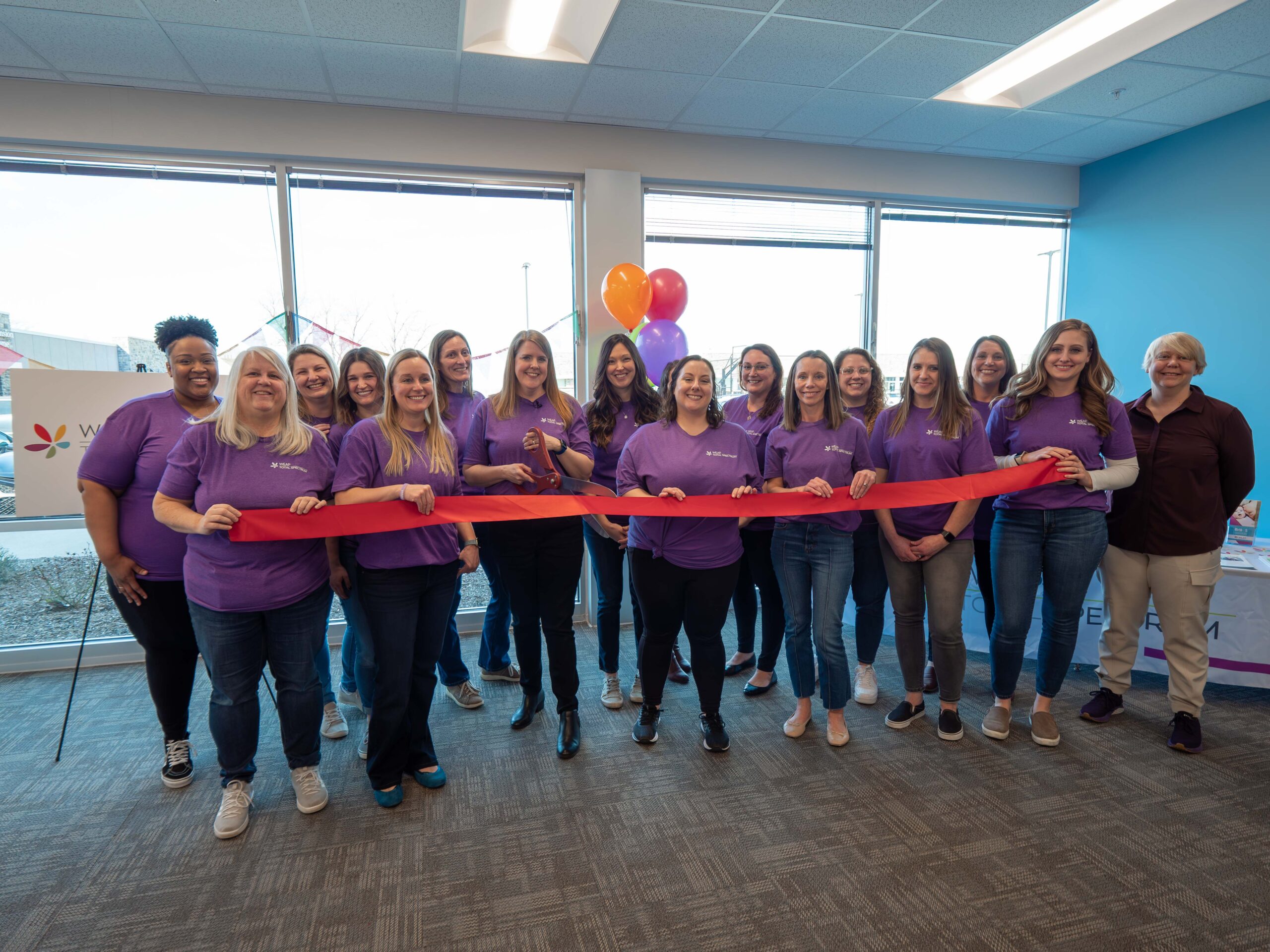
The Wisconsin Early Autism Project (WEAP) and Total Spectrum proudly announce the successful opening of the Mount Pleasant Learning Center.

The Learning Center, which focuses on providing specialized and comprehensive applied behavior analysis (ABA) therapy services for children with autism, officially opened on March 20.

It’s a place that fosters learning, socialization, and independence for children on the autism spectrum.

Tailored Treatment for Kids on the Autism Spectrum

“At our Mount Pleasant location, we hope to bring families in the Greater Racine County area compassionate, contemporary ABA therapy for children with autism spectrum disorder,” Linda Klotz, WEAP’s clinical director, said at the opening event.

“With a focus on tailored treatment, this new Learning Center offers individualized interventions to meet the specific needs and interests of each learner,” she said. “We couldn’t be more excited to open our doors to the community and provide these necessary services.”

Partnership Focuses on Helping Kids with Autism Thrive

Operated jointly by WEAP and Total Spectrum, organizations with a combined 35 years of experience serving children with autism across Wisconsin, the Mount Pleasant Learning Center provides a holistic approach to assessment, diagnosis, and treatment to help children achieve their full potential.

The grand opening of the Mount Pleasant Learning Center allowed families to meet key members of the leadership team and featured participation from the local community, tours of the facility, and spring-themed activities for families.

“In Kenosha, we’re honored to be included at such a great event,” Kenosha Chamber of Commerce President Dave Strash said at the opening. “We are all about the business community celebrating business successes, and one of our favorite things to do is a ribbon cutting — especially celebrating a much-needed service like the one you guys are providing to the community goes beyond words.”

To find out more about the Mount Pleasant Learning Center, visit https://learnbehavioral.com/prioritiesaba/blog/tour-our-mt-pleasant-aba-therapy-learning-center

The Autism Diagnosis Process: What to Expect

When it comes to parenting, the unknown can be one of the hardest parts. Worries creep in if you suspect something’s wrong with your child’s development. If you think your child may be showing signs of autism, there’s no guidebook to tell you what to do next.

It’s natural to feel overwhelmed. The process gets easier when you know what to expect.

If you’ve found your way to this post, you’ve likely taken the first step: questioning whether your child shows signs of autism.

Recognizing this possibility is a significant and sometimes challenging move. Rest assured, you’re not alone. This guide is here to provide you with valuable insights and support as you navigate through this process.

Understanding Autism

Autism spectrum disorder (ASD) affects how a person interacts, learns, and behaves. Everyone on the spectrum is different. Signs of autism usually start showing up when a child is very young.

Recognizing the Symptoms

Autism symptoms can be different for everyone. If your child is not growing or learning like other kids their age, or if they have any of the following signs, you might want to talk to your pediatrician:

  • Not smiling at others by six months
  • Not gesturing or pointing to communicate by 12 months
  • Not babbling by 12 months
  • Not using single words like “no,” “mama,” “dada” by 16 months
  • Not using two-word phrases like “want cup,” “go play” by 24 months
  • Not responding to sounds, voices, or their own name by three years
  • Poor eye contact by three years
  • Little interest in other children or caretakers by three years
  • Losing skills they once had at any point by three years

The Diagnosis Process

Getting a diagnosis of autism starts with an evaluation. Experts will examine how a child behaves and will look at their past development. If your child’s pediatrician thinks it might be autism, they’ll send your child to an expert for a closer look. This process includes:

  • A parent interview
  • Review of medical, psychological, and school records
  • Assessment of cognitive, developmental, and adaptive functioning skills
  • Observation of your child during play

What Happens Next?

After an autism evaluation, our team of specialists will review and interpret the results. If your child is diagnosed with autism, our team will work with you to create a personalized treatment plan. This plan includes therapies to help improve communication, social skills, and behavior.

At LEARN, we work with families on a plan tailored to your family’s needs. We will adjust the treatment plan as needed. We’ll also provide you with resources and support.

Whether you’re just noticing signs or you’re already deep into the diagnosis process, our team is here to help. We know that recognizing and diagnosing autism can be challenging. But with the right support and guidance, you can navigate it confidently.