Private Insurance and ABA Therapy in North Carolina: A Parent’s Guide

Key takeaways

  • North Carolina requires many state-regulated group health plans to cover ABA therapy for a person with an autism diagnosis, with an annual cap of up to $40,000 and coverage that may be limited to age 18 or younger.
  • ACA-compliant individual and small-group plans are not covered by this specific state law, since federal rules already require them to cover essential health benefits, which generally include autism treatment.
  • There is no limit on the number of visits, and cost sharing must match what applies to other medical care.
  • North Carolina only recently created an independent licensing board for behavior analysts, which began accepting applications in July 2023, after years as the only state requiring psychologist supervision.
  • North Carolina Medicaid covers ABA for eligible kids through EPSDT, generally through age 20.
  • LEARN Behavioral, through its Priorities ABA team, is in network with most private insurers and verifies your specific benefits before therapy begins.

If you are a parent of a child with autism in North Carolina, you have probably heard that applied behavior analysis (ABA) therapy can help kids build communication, social, and daily living skills. Figuring out how to pay for it is usually the hardest part. This guide walks through what the law requires, how to check your own plan, what you might pay, and how Medicaid fits in.

How private insurance covers ABA therapy in North Carolina

Private insurance covers ABA therapy in North Carolina for most families with a state-regulated group plan. Under North Carolina’s autism insurance law (N.C.G.S. section 58-3-192), health benefit plans must provide coverage for the screening, diagnosis, and treatment of autism spectrum disorder (ASD), and an insurer cannot terminate, refuse to issue, or refuse to renew coverage solely because a person has an autism diagnosis.

There is an important exception built directly into the statute. The law does not apply to ACA-compliant individual and small-group plans because those plans already must cover essential health benefits under federal rules, which generally include autism treatment. In practice, this means that the mandate itself, plus federal essential-health-benefit requirements, together reach nearly every type of private plan through two different legal paths. LEARN delivers care through its Priorities ABA team wherever it fits your family, whether in your home and community, at your child’s school, or in a center-based Learning Center.

What North Carolina’s autism insurance law requires

North Carolina law (N.C.G.S. 58-3-192) sets out several protections for families with state-regulated coverage:

  • Health benefit plans must cover the screening, diagnosis, and treatment of autism spectrum disorder.
  • Coverage cannot be denied on the grounds that treatment is habilitative or educational in nature.
  • Cost sharing for autism treatment cannot be less favorable than for other medical services generally covered by the plan.
  • An insurer cannot terminate or refuse to issue or renew coverage solely because a person has an autism diagnosis.
  • Adaptive behavior treatment, including ABA, can be ordered by a licensed physician or psychologist and provided or supervised by several types of professionals, including a board certified behavior analyst (BCBA).

Where the law leaves more flexibility is the annual dollar cap. Plans may cap coverage at up to $40,000 per year, adjusted annually for inflation, and coverage may be limited to individuals 18 or younger. The federal parity law, the Mental Health Parity and Addiction Equity Act, still requires that behavioral health limits be no more restrictive than those for medical and surgical care, so not every plan will use the full extent of what state law allows.

Is your plan fully insured or self-insured?

Beyond the ACA carve-out described above, there is a second layer worth checking. North Carolina insurance law governs state-regulated plans. Many large employers, though, use self-funded (self-insured) plans, where the employer pays claims directly. Self-funded plans are governed by federal ERISA law rather than state mandates, so the North Carolina protections described above may not apply to them.

Finding out takes only a few minutes. Follow these steps:

  1. Call the member services number on your insurance card, or ask your employer’s benefits contact.
  2. Ask whether your plan is fully insured, self-funded, or an ACA individual or small-group plan.
  3. Ask whether ABA therapy for autism is a covered benefit under your plan, and whether an age or dollar limit applies.
  4. If the plan is self-funded, ask whether it voluntarily follows the state autism mandate, since many large employers cover ABA even when they are not required to.

Why this matters: Two North Carolina families with plans from the same insurer can have very different ABA coverage because one plan is state-regulated, another is an ACA individual plan, and the third is self-funded. The card alone will not tell you, so it is worth confirming for your own kids before you assume.

How much does ABA therapy cost with private insurance in North Carolina?

When your plan covers ABA, your out-of-pocket cost is usually limited to standard cost sharing, such as your copay, coinsurance, and deductible, up to your plan’s out-of-pocket maximum. The total amount of therapy varies from one child to the next, because a board certified behavior analyst (BCBA) sets the recommended hours in an individualized treatment plan.

A few cost details are worth knowing in advance:

  • Coverage usually starts with an assessment before ongoing therapy begins.
  • Your BCBA submits a treatment plan for authorization, and the plan is reauthorized periodically as your child makes progress.
  • Some plans apply a separate behavioral health deductible.
  • In-network care generally costs less than out-of-network care, so ask which of our locations are in your network.

Because plan designs differ widely, the most reliable way to understand your costs is to have your provider verify your benefits before services start. You can learn about our ABA therapy services and contact our intake team to have your North Carolina benefits checked at no cost.

Private insurance for ABA: Who does LEARN work with in North Carolina?

In North Carolina, LEARN Behavioral serves families through its Priorities ABA team and is in-network with most private insurance companies, accepting all forms of private insurance in addition to Medicaid. Our intake and authorizations team verifies the benefits of your specific plan before therapy begins, so you know what is covered up front.

Families across North Carolina carry coverage from carriers such as Blue Cross Blue Shield of North Carolina, Aetna, Cigna, UnitedHealthcare, and TRICARE, given the state’s large military population near Camp Lejeune and Fort Bragg. Each carrier covers ABA subject to medical necessity and the terms of your specific plan, so confirming your individual benefits is an important step. Rather than guessing based on a plan name, reach out and let our team verify your coverage directly.

Proving medical necessity and handling denials or appeals

Private coverage for ABA depends on medical necessity, meaning you must demonstrate that ABA is the appropriate treatment for your child’s needs. To establish medical necessity in North Carolina, you will generally need the following:

  1. A formal autism diagnosis from a licensed physician or licensed psychologist.
  2. A treatment plan ordered by that physician or psychologist, listing your child’s goals and the recommended type and frequency of care.
  3. Records provided to the insurer on request to show that care is medically necessary and is producing progress.

If a claim is denied, you have the right to appeal directly to your insurer first. If that internal appeal does not resolve it, you can request a free external review through the North Carolina Department of Insurance’s Smart NC program, generally within 120 days of the final denial. An independent review organization then decides the case, and the decision is binding on your insurer.

Medicaid coverage for ABA therapy in North Carolina

North Carolina Medicaid also covers medically necessary ABA therapy for children. Coverage runs through the federal EPSDT benefit for eligible members, generally through age 20, delivered as a research-based behavioral health treatment through the state’s managed care system, with prior authorization required.

ABA under NC Medicaid can be ordered and supervised by a licensed behavior analyst through the state’s own licensing board, among other qualified professionals. If your child is enrolled in Medicaid, ask your managed care plan how to request an ABA authorization and which providers in your area are enrolled.

Where to get ABA therapy in North Carolina with LEARN

In North Carolina, LEARN Behavioral provides in-home, in-school, and center-based ABA therapy for children and young adults through its Priorities ABA team. Our board certified behavior analysts (BCBAs) build an individualized treatment plan for each child, and our behavior technicians (BTs) deliver one-on-one care that focuses on building desired behaviors and reducing interfering and interrupting behaviors.

We serve families and their kids across the state, including many military families. You can explore our North Carolina locations, including Charlotte, as well as our Learning Centers in Cary, Jacksonville, and Fayetteville.

Ready to begin? Here is a simple path to get started:

  1. Get a written autism diagnosis from a licensed physician or psychologist.
  2. Contact our intake team to verify your North Carolina benefits and confirm your plan type.
  3. Begin an assessment, after which your BCBA builds your child’s individualized treatment plan.

To take the next step, learn about our ABA therapy services and contact our intake team.

Frequently asked questions

Does private insurance cover ABA therapy in North Carolina?

In most cases, yes. If your plan is a state-regulated large-group or fully insured plan, North Carolina law requires it to cover the diagnosis and treatment of autism, including ABA. ACA-compliant individual and small-group plans are handled separately: they are not covered by this state law, but federal essential health benefits rules generally require them to cover autism treatment anyway.

Is there an age limit for ABA coverage in North Carolina?

There can be. State-regulated plans may limit coverage to individuals 18 or younger, though not every insurer applies that limit. North Carolina Medicaid reaches further, generally covering ABA through age 20.

Is there a dollar cap on ABA in North Carolina?

Plans may apply an annual cap of up to $40,000, which is adjusted each year for inflation. Because ABA is treated as an essential health benefit on many ACA-compliant plans, a growing number of families will not actually hit that ceiling in practice.

Does North Carolina require licensure for behavior analysts?

Yes, and fairly recently. A dedicated licensing board began accepting applications in the summer of 2023. Before that, North Carolina was the only state in the country requiring behavior analysts to work under a licensed psychologist’s supervision.

Does Medicaid cover ABA therapy in North Carolina?

Yes. North Carolina Medicaid covers ABA as a research-based behavioral health treatment for eligible children under 21 through the EPSDT benefit, delivered through the state’s managed care system with prior authorization.

Which insurers does LEARN Behavioral work with in North Carolina?

In North Carolina, LEARN Behavioral serves families through Priorities ABA and works with most private insurers and Medicaid. Because plan terms vary, our intake team confirms your exact coverage before therapy begins.

Choosing An ABA Provider: 10 Essential Questions For Parents

Choosing an ABA provider is an important decision, and it can feel overwhelming.

After receiving an autism diagnosis and a recommendation for applied behavior analysis (ABA) services, many families have questions about how ABA may help, what services will look like, and who will be working with their child. It’s also important to consider practical issues, including how much treatment will cost, how quickly services can begin, and what to do if concerns arise. Preparing questions in advance and understanding insurance, costs, authorizations, and billing can make it easier when choosing an ABA provider. This blog also covers how to choose an ABA provider and common questions to ask ABA provider teams before you start.

Helpful resources exist to evaluate providers clinically. The Council of Autism Service Providers (CASP), through its parent resource The Spectrum, offers “10 Must-Ask Questions When Interviewing ABA Providers,” which guides families in assessing clinical qualifications, treatment approach, supervision, and family involvement.

This blog focuses on the practical side of accessing ABA services and answers the questions: What should I look for when choosing an ABA provider? How do I verify the credentials of an ABA therapist? What questions should I ask an ABA clinic before enrolling my child? How important is experience with my child’s age and needs when selecting an ABA provider? Should I choose in-home, clinic-based, or school-based ABA services?

We recommend asking these 10 questions before choosing an ABA provider.

1. Are you in-network with my insurance?

“Do you accept my insurance?” and “Are you in-network with my specific plan?” can yield different answers. Ask whether the provider is in-network with your plan and whether the services recommended are covered. Also, contact your insurance company to confirm benefits, including deductibles, coinsurance, copays, prior authorization requirements, and any limits.

2. What will my family’s financial responsibility be?

Insurance coverage does not always mean services are free. Request an estimate of out-of-pocket costs, including deductibles, copays, and coinsurance, and ask how costs might change if the service authorization changes. Clarify how the provider’s billing translates into your monthly statements and make sure the cost of ABA therapy is explained in writing. Understanding the cost of ABA therapy helps you compare options when choosing an ABA provider.

Tip: Ask the provider and your insurance the same questions from #1 and #2. Comparing answers can reveal issues before services begin.

3. Could my child qualify for Medicaid as secondary insurance?

Depending on your state, a child with a disability may qualify for Medicaid even if the family has private insurance. Medicaid as secondary coverage may help with costs your primary plan doesn’t cover. Ask whether your child may qualify, which program to apply for, how to apply, and whether the provider can help you understand the process. Confirm the provider is in-network with any plan you plan to use.

4. Do you offer financial assistance or payment options?

If you expect out-of-pocket costs, ask about financial assistance, payment plans, or other resources to help manage expenses. Discuss options before services begin so you understand choices before receiving a bill.

5. Who handles prior authorization and insurance appeals?

Many plans require prior authorization before ABA starts and renewals as treatment continues, often every six months. Ask whether the provider manages authorizations, what happens if fewer hours are approved or coverage is denied, and whether the provider supports appeals. You may need to provide consent for the provider to appeal on your behalf. These are key questions to ask ABA provider teams to help you choose an ABA provider who will advocate for your child.

6. How soon could my child start services, and will availability meet our needs?

A provider may be in-network but have limited availability. Ask about expected start times and whether services are available at the location, on the days, and at the times that fit your schedule. If there’s a waitlist, ask about updates and interim resources. Also ask whether they offer in-home, clinic-based, or school-based ABA services, and which setting they recommend for your child’s goals and your family’s routine.

7. How will billing and claims be handled?

Ask who submits claims, how often you’ll receive bills, and whom to contact with questions. Inquire how denied or incorrectly processed claims are handled and whether the billing team helps resolve discrepancies. Request plain-language explanations so you can compare bills with your Explanation of Benefits (EOB). If you want ABA billing and claims explained clearly, ask for an orientation session or a written guide. Having ABA billing and claims explained up front reduces surprises and supports informed decision-making when choosing an ABA provider.

8. How can I access my child’s records?

Ask how to access your child’s assessment, treatment plan, progress notes, and reports; how to request records; and typical turnaround times. Families should feel comfortable asking for information and understanding what it means.

9. What is your grievance or complaint process?

Even with a positive relationship, questions or concerns can arise. Ask who to contact, whether there’s a formal grievance process, how concerns are reviewed, and how outcomes are communicated. Providers who value partnership are transparent about how they address concerns.

10. What should I expect to see on my Explanation of Benefits (EOB)?

An EOB is generally not a bill. It shows how a claim was processed: the amount billed, allowed, paid by insurance, and your responsibility. Review your EOB and compare it with any bill. If something doesn’t make sense, contact the provider’s billing department or your insurer.

Verifying credentials and matching experience

When choosing an ABA provider, verify that clinical leads are board certified behavior analysts (BCBAs) in good standing and, where required, licensed. Ask for certification numbers and check the BACB registry. Ask about experience with your child’s age, communication level, and co-occurring needs; experience that closely matches your child is important when choosing an ABA provider. These are essential questions to ask ABA provider staff before enrolling.

Service setting: in-home, clinic-based, or school-based?

Each setting offers pros and cons. In-home can support routines and parent training; clinic-based may allow focused, distraction-reduced learning and peer interaction; school-based can coordinate with educational goals. Ask which setting the provider recommends for your child and whether you can combine settings over time. How to choose an ABA provider often depends on the setting that best supports your goals and schedule.

Parent Tip: Don’t assume your family earns too much for Medicaid.

Eligibility for children with disabilities may differ from income-based Medicaid. Depending on your state and your child’s circumstances, a child may qualify based on disability, even if the family has private insurance. If you think your child may qualify, ask your state’s Medicaid program or a benefits specialist about eligibility and how to apply.

One final piece of advice

You don’t need to be an insurance expert to ask good questions. A reputable provider will explain financial responsibility, help you understand authorizations and billing, respect your rights as a client, and answer questions about care. The more you understand before services begin, the better prepared you’ll be to make an informed decision. Also, ask about provider credentials, experience with your child’s age and needs, and whether in-home, clinic-based, or school-based services are available and appropriate—core steps in choosing an ABA provider and key questions to ask ABA provider teams.

Additional Resources

For evaluating provider quality, The Spectrum from the Council of Autism Service Providers (CASP) offers “10 Must-Ask Questions When Interviewing ABA Providers,” with guidance on qualifications, clinical practices, supervision, and family involvement.

Autism Diagnosis Without Bias: Eye Gaze Technology and Equity in Action

Dr. Hanna Rue and Jonathan Lehmann join us to discuss the importance of early diagnosis and the potential of a new tool aimed at addressing health disparities, particularly for families from diverse backgrounds. In this episode, we explore the application of the EarliPoint device, which uses eye gaze tracking technology to diagnose autism in children aged 16 to 30 months. Dr. Hanna Rue emphasizes, “We all know that access to diagnostics can be extremely challenging. Within the Boston area, some families are waiting three years. Research supports that the earlier you start with services, the better outcomes you have.”

View the transcript, show notes, and previous episodes at: https://www.allautismtalk.com/episodes/eye-gaze-technology-and-equity-in-action

All Autism Talk is sponsored by LEARN Behavioral.

Priorities ABA Celebrates 25th Anniversary

Priorities ABA, North Carolina’s premiere contemporary applied behavior analysis (ABA) provider of center-based, in-home, and school-based autism services for children, celebrates its 25th anniversary this year.

“We’re thrilled to celebrate our 25th anniversary of helping children and families grow, learn, and thrive,” said Emily Cogdell, LPA, LBA, BCBA, Regional Clinical Director.

Priorities ABA, a provider of LEARN Behavioral, is proud to announce its 25-year milestone. The organization is celebrating in a unique way by holding themed activities for children and families at their Cary, Fayetteville, and Jacksonville Learning Centers each month throughout the year. For example, in April, Priorities ABA celebrated Earth Day with a fun Scavenger Hunt at each of their Learning Centers.

“Families are excited about all the different themed activities, and the children particularly enjoy the themed activities where they may wear costumes or dress up for the day,” noted Cogdell.

In addition to themed activities for children and families, Priorities ABA staff is celebrating the 25th anniversary by giving back through monthly employee outreach initiatives that support various local community nonprofit organizations. Each month, staff hold a different drive to support the community – from a clothing drive, to a book drive to promote reading awareness, to a food drive for Second Harvest Food Bank in Fayetteville.

Growing & Expanding Services

Priorities ABA was founded in 2001 and primarily served the Greenville area. As one of the earliest team members, Cogdell began working with Priorities ABA in 2004, delivering one-on-one ABA therapy to children on the autism spectrum.

“In the beginning, Priorities ABA had a team of four Board Certified Behavior Analysts (BCBAs), and services provided to children were limited to home-based,” Cogdell explained. “This meant that the BCBAs were only able to provide ABA therapy to children a couple of times per week.”

“Fast forward 25 years, Priorities ABA has branched out and is able to help many more families as we’re able to provide services where the children are – whether that’s at one of our Learning Centers, or at home or school,” explained Cogdell, whose team currently works in home, community, and school settings, tailoring ABA programs around the strengths and weaknesses of children with autism.

Priorities ABA is committed to focusing on each child’s unique needs, providing personalized, child-centered care to help them succeed, while also supporting the family.

Priorities ABA provides in-home, center-based, and school-based ABA services at three state-of-the-art Learning Centers located in Cary, Fayetteville, and Jacksonville, NC. In addition to a team of 13 BCBAs, Priorities ABA now employs more than 100 Behavior Technicians (BTs) who provide ABA services to children and families each day.

Cogdell continued, “Many of our BCBAs have been with us for 7 to 15 years. This longevity speaks to the culture we have created. What we do and how we do it is important – we believe in both.”

About Priorities ABA

Priorities ABA, part of the LEARN Behavioral network, is one of the nation’s leading providers of compassionate autism care. Now celebrating 25 years, Priorities ABA has been delivering evidence-based services, helping children and adolescents with autism find success and reach their unique potential.

Priorities ABA has locations in Cary, Fayetteville, and Jacksonville, NC. For more information or to enroll a child, call (252) 341-4192 or visit prioritiesaba.com

About LEARN Behavioral

LEARN Behavioral is a national leader in autism treatment, offering comprehensive diagnostic services and contemporary applied behavior analysis (ABA) therapy for children with autism spectrum disorder. With a nationwide network of ABA providers and more than 100 Learning Centers across the country, LEARN delivers the highest standard of research-based care—customized to meet the unique needs and interests of each child and family. For more information, visit learnbehavioral.com

Unlocking Communication: The Story of PECS with Dr. Andy Bondy & Lori Frost

In this episode, we’re joined by Dr. Andy Bondy and his wife, Lori Frost, MS, CCC-SLP, who are the co-founders of Pyramid Educational Consultants, Inc. They’re also the creators of the Picture Exchange Communication System (PECS). Together, they share about the origins and updates of PECS, their work around the world, and the release of the 3rd Edition of the PECS Manual.

We explore the importance of everyday language when discussing effective teaching strategies, the power of collaborative teamwork, and the need for truly individualized support. Andy and Lori also provide a forward-looking perspective on the future of PECS and emphasize why embracing cross-cultural understanding is essential for effective communication.

Join us for this insightful conversation that offers evidence-based communication practices designed to empower parents, educators, and clinicians. 

View the transcript, show notes, and previous episodes at: https://www.allautismtalk.com/episodes/the-story-of-pecs

All Autism Talk is sponsored by LEARN Behavioral.

Q&A About ABA Therapy for Children with Autism: FAQ for Caregivers

Was your child recently diagnosed with autism? Are you beginning to navigate treatment for your child? Before you get started, check out these seven FAQs about ABA therapy.

What is the goal of ABA therapy?

ABA therapy is designed to support autistic individuals and their families, achieve their identified goals, and improve their quality of life. ABA-based interventions are supported by decades of research and enhance social, communication, play, and adaptive skills. Services incorporate the needs and interests of the autistic individual and their caregiver(s). A behavior analyst delivers the ABA services with the help of behavior technicians, who often provide direct care to the autistic individual. Services are tailored to the individual’s unique needs, with their feedback, and evolve over time. Services for children may look quite different than services for adults, given the individuals’ needs differ over time.

What is “contemporary ABA therapy”?

At LEARN, we refer to our approach as “contemporary ABA.” It is an evolved approach to ABA therapy that promotes individualized treatment, naturalistic and play-based teaching, and is person-centered. LEARN provides a contemporary approach that acknowledges the evolution of ABA, values the individual and their family, and creates space for individuality. Practicing contemporary ABA means that our behavior analysts deeply understand their responsibility to positively and meaningfully impact the lives of the individuals served.

How many hours of ABA therapy will my child receive?

Your child’s hours will be determined between you and your behavior analyst. Your behavior analyst recommends hours based on assessing your child’s needs, other therapies received, and your feedback as the parent/caregiver. Focused programs range from 10-25 hours per week, and comprehensive programs range from 30-40 hours weekly. At LEARN, we provide home-based, center-based, and community-based services, and you can reach out to your local clinical director to find out which services are available in your area.

Are your ABA therapy services individualized?

Absolutely! Each autistic person we serve is unique, and we believe that should be celebrated. Our goal is to promote individual interests and incorporate those into ABA therapy. Behavior analysts make individualized recommendations for services, including hours based on the child and customized goals that fit their needs. Behavior therapists receive training on how to understand the preferences of their clients and include those in sessions to make them fun, rewarding, and engaging.

How is neurodiversity integrated into your approach to ABA therapy?

Listening to the perspective of autistic folks has informed our approach to ABA therapy and led us to incorporate neurodiversity into our practice. Our goal is to elevate the autistic voices in our community, including the individuals we serve, our neurodivergent employees, and the greater neurodivergent community. We’re deeply committed to person-centered ABA therapy practices and promote assent-based care, meaning we validate the identities and experiences of neurodivergent folks and create space for autistic voices to be heard and upheld.

Will my child be required to do discrete trials and sit at a table?

Not all autistic folks benefi t from discrete trials or tabletop work. For example, a two-year-old child with lots of energy may benefit more from a play-based approach with the therapist sitting on the floor and embedding learning opportunities in play with their favorite toy. Behavior analysts overseeing the treatment plan take time to assess the individual’s needs and work collaboratively with the family to identify an approach to treatment that will work best for the child.

What if someone doesn’t want ABA therapy?

We understand that not everyone seeks ABA therapy, feels it’s the best fit, or perhaps, thinks it’s the right time to try. As with other medical services, the patient (along with their caregiver, if a child) has the right to decide when, if, and what treatment is right for them. Not all ABA therapy providers have the same approach, either, and LEARN supports a family’s right to choose a provider that meets their needs and is a good match for their treatment goals. We want families and our clients to be excited about services and encourage collaboration on our journey together.

Why Play is Essential to ABA Therapy for Autistic Children

Play is an essential part of working with children with autism in ABA.

As a behavior technician (BT), play helps build trust and comfort between you and your client. That process starts with play, having fun, and being a kid. Getting your clients in a state of play builds this foundation for trust, which we refer to as “rapport.” When starting to work with a new client, your supervisor and/or client’s caregiver will provide you with some of your client’s special interests and activities. You can incorporate these into your sessions to make learning fun and personalized. Using rapport in combination with their preferred activities leads to successful pairing with your client.

In a Learning Center setting, for example, your supervisor may suggest activities such as playing with toys or board games or interacting with peers. Your client may quickly find interest in a Learning Center toy, game, or other activity without prompting. But, if your client doesn’t give you a direct response, give them choices based on what you know about them. For example, say “We can play with train tracks or do a puzzle. What would you like to do?” Give them different choices until they choose something.

As soon as they give you an answer or show signs of interest in something, reinforce the toy or activity by showing interest in it yourself, e.g., clapping or showing praise. In my experience, this part of the pairing process varies. Sometimes it may take a while for a client to warm up in a social environment. Other times, it happens quickly. It just depends on the individual. As a BT, this process teaches you to be patient. When you find out what interests your clients, it makes pairing with them in sessions more fun.

Natural Environment Teaching (NET) While Pairing

Playing and pairing as a BT is essential because it creates opportunities for natural environment teaching (NET). Playing with your clients encourages an environment in which they’re motivated to participate.

In my first week working with a client, we played Memory*, a matching game. This was the first time we actively played together, and I saw him deeply engaged in an activity. I learned that he has a great memory, making the game more engaging for both of us. He became more receptive to responding once his attention was directed toward the game. Playing the game created opportunities to reinforce his behavior like waiting his turn, following the rules, and using his words when he had questions. This was essential to pairing early on in our tech-to-client relationship.

Playing Memory aided me in building rapport with my client. It built trust and comfort that’s pertinent to his learning environment. I could tell he was having a good time and vice versa. This environment motivated my client to learn. He enjoyed engaging in the fun activity with me and a group of peers. Participating in group games encourages patience, following instructions, and communication between clients.

Let Play Be Your Guide

Gaining your client’s trust before you place any demands is key. They are less likely to listen to you if they don’t know who you are. That’s why it’s important to take the time to play and pair with your client and show them that you’re safe and fun to be around.

Learning to play with your clients teaches you their interests. It shows you their likes and dislikes. It also points you to different games or activities in the Learning Center or teaching environment that may trigger them. Knowing their interests allows you to identify their reinforcers and see behavior patterns that their board certified behavior analyst (BCBA) can implement into future programming.

Time Flies When You’re Having Fun

Playing can be a lot of fun for BTs. There are several Learning Center games and activities that I enjoy implementing during sessions. I do my best to engage clients in activities that we mutually like. Once we find something we both enjoy, it doesn’t feel like work.

It’s rewarding to see clients make progress on their goals. Seeing them motivated to work for their preferred activities is also reassuring. This sense of accomplishment reinforces your work as a BT and motivates a continued state of play of learning and developing communication skills.

Incorporating play into your sessions fosters meaningful connections and creates a fun and engaging environment. It builds the foundation of trust between the client and their BT. We get to play an important role in each client’s learning and development. We can help nurture each child’s unique potential through dedication – one game at a time.

Additional Resources:

*Other games for pairing with a client can be found in the Play and Learning Addendum, 2.

Advocating for Your Family and Good, Contemporary ABA With Arfa Alam

Arfa Alam is a senior manager at the Partnership for Public Service, a non-profit that envisions a dynamic and innovative federal government that effectively serves our diverse nation. Prior to joining the Partnership, Arfa performed labor human rights and social responsibility work in more than 40 countries in both the public and private sectors. Arfa joins us to share her experience and deep conviction for the appropriate care, and rights for all. She is the proud mother, wife, and sister of disabled and differently-abled individuals, including her two autistic sons, her husband who lives with early onset Parkinson’s disease, and her twin sister, who is deaf and was the first person in life to teach her about differences and empathy. 

As she shares, “As a first-generation American, it is particularly important to me to bring awareness, acceptance, and inclusion to our communities for individuals with disabilities and neurodivergences.” Arfa’s passion for public service stems from her experience as a first-first-generation Muslim-American with special needs family members. We are grateful for the opportunity to have this discussion with Arfa and we look forward to having her with us again soon.

For more information:

https://www.bestbuddies.org/

https://marybarbera.com/

All autism talk (allautismtalk.com) is sponsored by LEARN Behavioral (learnbehavioral.com).

Mt. Pleasant, Wisconsin, Learning Center Opening

Mount Pleasant Learning Center: Specialized Autism Therapy in Wisconsin

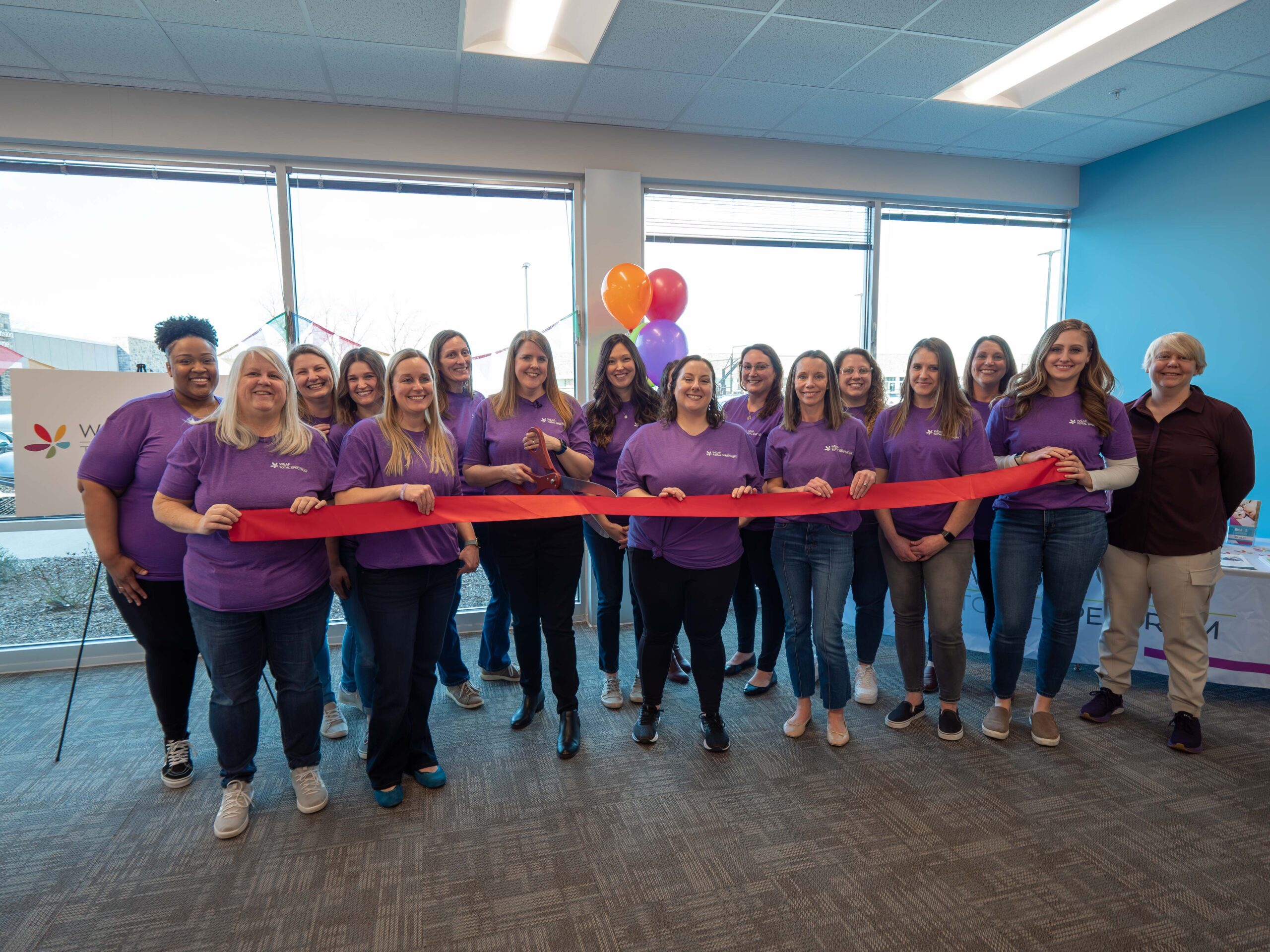
The Wisconsin Early Autism Project (WEAP) and Total Spectrum proudly announce the successful opening of the Mount Pleasant Learning Center.

The Learning Center, which focuses on providing specialized and comprehensive applied behavior analysis (ABA) therapy services for children with autism, officially opened on March 20.

It’s a place that fosters learning, socialization, and independence for children on the autism spectrum.

Tailored Treatment for Kids on the Autism Spectrum

“At our Mount Pleasant location, we hope to bring families in the Greater Racine County area compassionate, contemporary ABA therapy for children with autism spectrum disorder,” Linda Klotz, WEAP’s clinical director, said at the opening event.

“With a focus on tailored treatment, this new Learning Center offers individualized interventions to meet the specific needs and interests of each learner,” she said. “We couldn’t be more excited to open our doors to the community and provide these necessary services.”

Partnership Focuses on Helping Kids with Autism Thrive

Operated jointly by WEAP and Total Spectrum, organizations with a combined 35 years of experience serving children with autism across Wisconsin, the Mount Pleasant Learning Center provides a holistic approach to assessment, diagnosis, and treatment to help children achieve their full potential.

The grand opening of the Mount Pleasant Learning Center allowed families to meet key members of the leadership team and featured participation from the local community, tours of the facility, and spring-themed activities for families.

“In Kenosha, we’re honored to be included at such a great event,” Kenosha Chamber of Commerce President Dave Strash said at the opening. “We are all about the business community celebrating business successes, and one of our favorite things to do is a ribbon cutting — especially celebrating a much-needed service like the one you guys are providing to the community goes beyond words.”

To find out more about the Mount Pleasant Learning Center, visit https://learnbehavioral.com/prioritiesaba/blog/tour-our-mt-pleasant-aba-therapy-learning-center